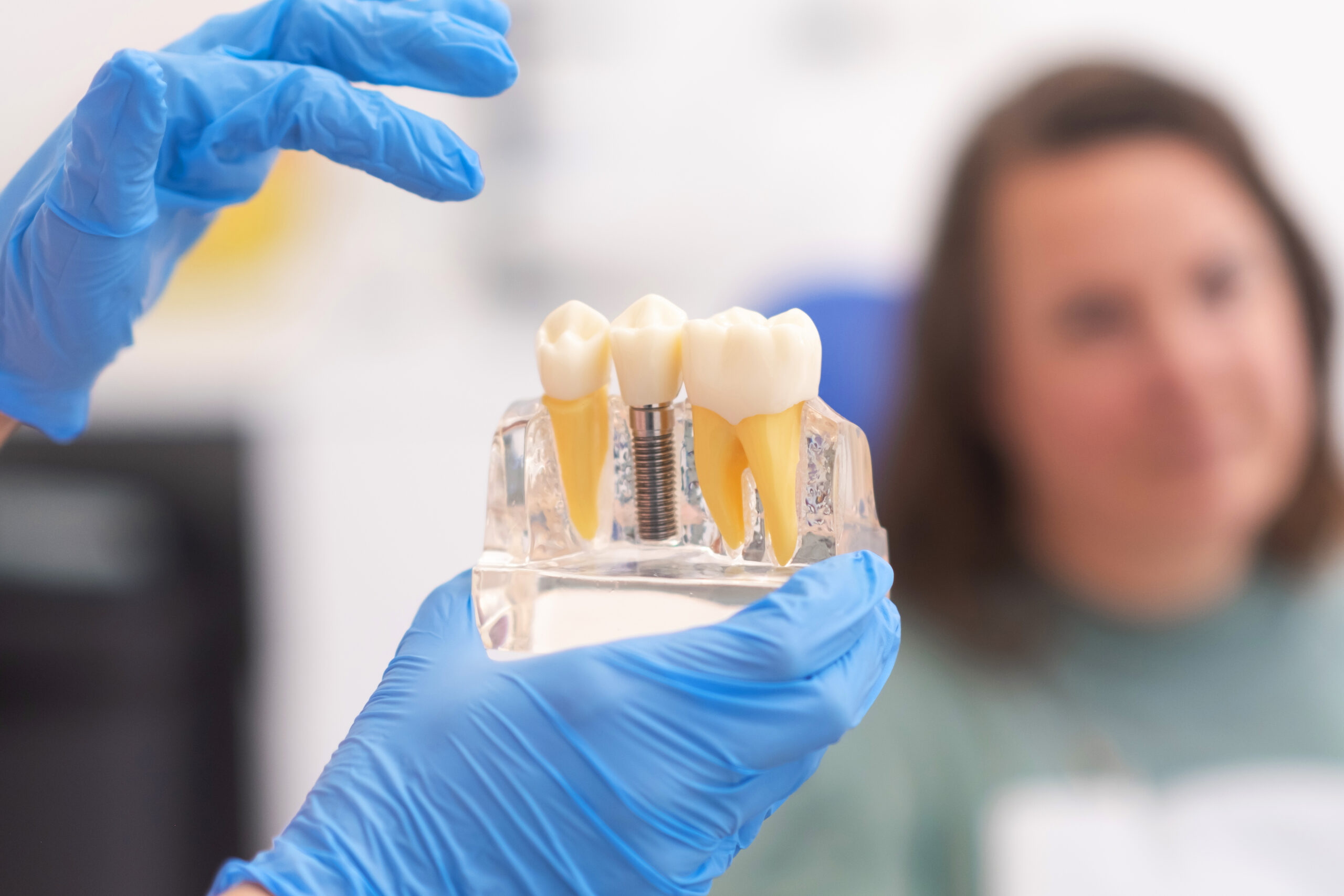
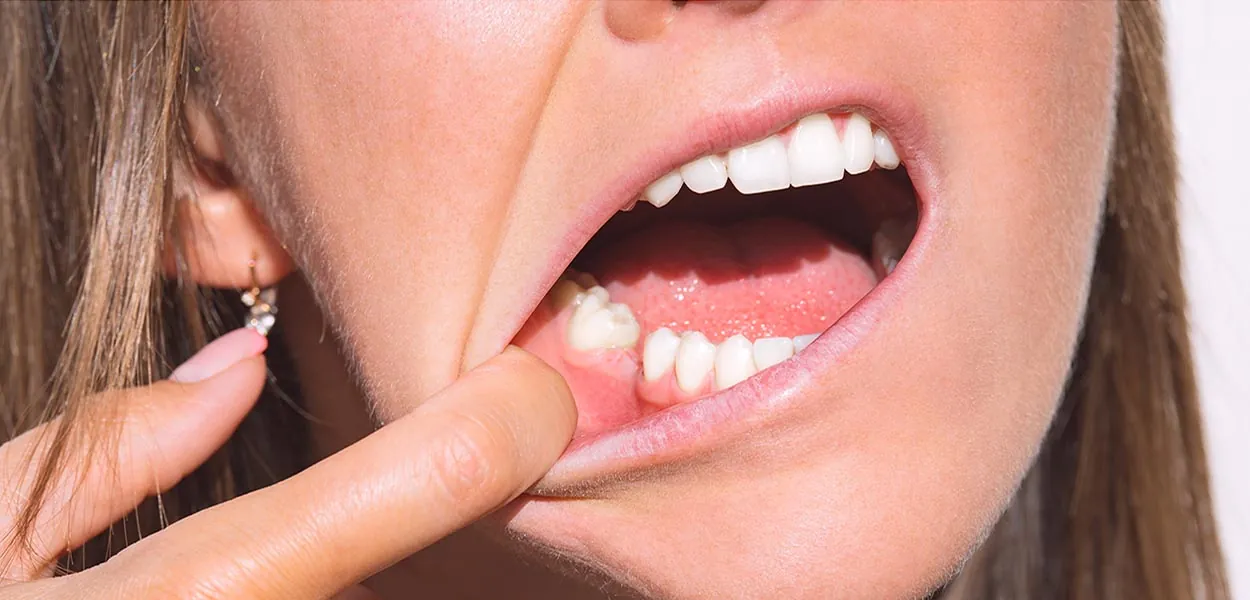
Losing a tooth or several teeth can impact not only your smile but also your self-esteem and overall oral health. There are various reasons why teeth are lost, such as decay, injury, or gum disease. Missing teeth can affect speech, make it difficult to chew properly, and lead to bone loss in the jaw. They can also cause remaining teeth to shift, further complicating your bite. Fortunately, several effective restorative options are available to restore both the function and the beauty of your smile.
At SmileCare Dental of Fitchburg, we specialize in helping patients restore their smiles and improve oral health with high-quality restorative solutions. Whether you need a single tooth replacement or a full restoration, we offer treatments according to your needs. Let’s explore the best options available to replace missing teeth.
Options for Replacing Missing Teeth
Dental implants
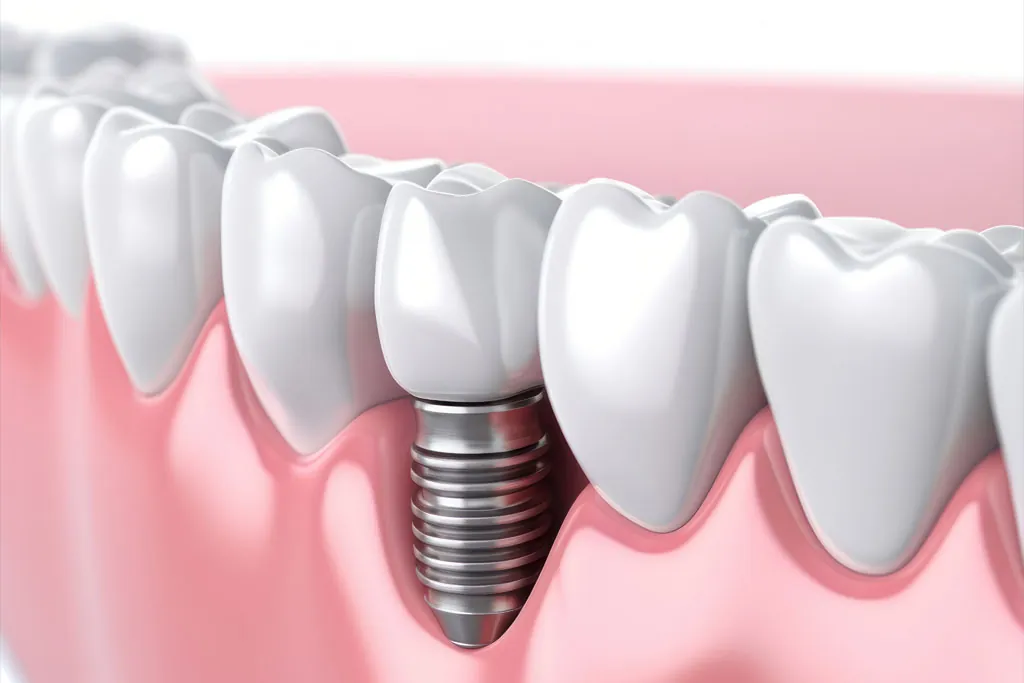
Dental implants are one of the most effective and permanent solutions for replacing missing teeth. An implant consists of a small titanium screw surgically placed into the jawbone, serving as a replacement root. Once the implant is fully integrated with the bone, a crown is attached to provide a natural-looking and fully functional replacement tooth.
Who Are the Right Candidates?
Dental implants are ideal for patients with healthy gums and sufficient bone density in the jaw. If you have experienced bone loss, bone grafting procedures can help restore the bone to support the implant.
Benefits of Dental Implants:
- Offer a permanent, stable, and durable solution.
- Look and feel like natural teeth.
- Help prevent bone loss by stimulating the jawbone.
- Adjacent teeth remain unaffected.
Positive Considerations:
While dental implants require a surgical procedure and some healing time, choosing a trusted dental office like SmileCare Dental of Fitchburg ensures a smooth process with minimal risk. With proper care, dental implants can last a lifetime.
Dentures
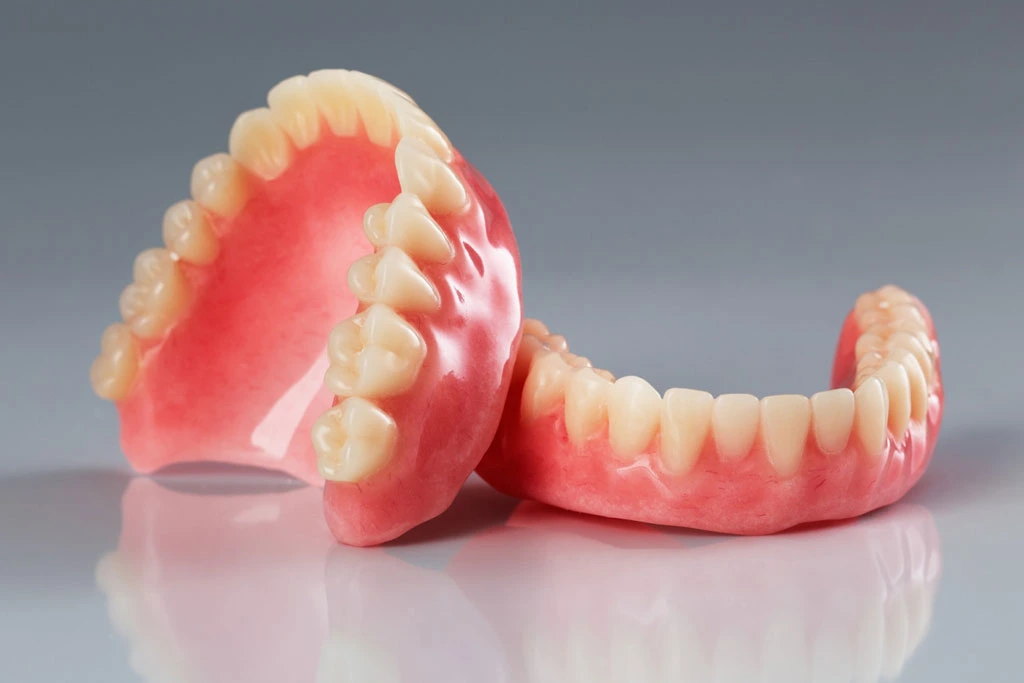
Dentures are a traditional option for replacing missing teeth. There are two types: partial dentures and complete dentures.
- Partial Dentures: Used to replace one or a few missing teeth. They fit around remaining natural teeth and are held in place with metal clasps or precision attachments.
- Complete Dentures: These replace all the teeth in the upper or lower jaw and are custom-made to fit your mouth comfortably.
Who Are the Right Candidates?
Dentures are an excellent option for patients with multiple missing teeth or for those who need a full set of teeth restored.
Benefits of Dentures:
- Provide a full set of teeth for improved functionality and aesthetics.
- Partial dentures are a flexible solution for replacing several teeth.
- Simple to use and easy to replace.
Positive Considerations:
While dentures can sometimes be less stable than implants, working with an experienced dental team can help ensure proper fit and comfort. Dentures also require regular maintenance, but they offer a non-invasive option for replacing missing teeth.
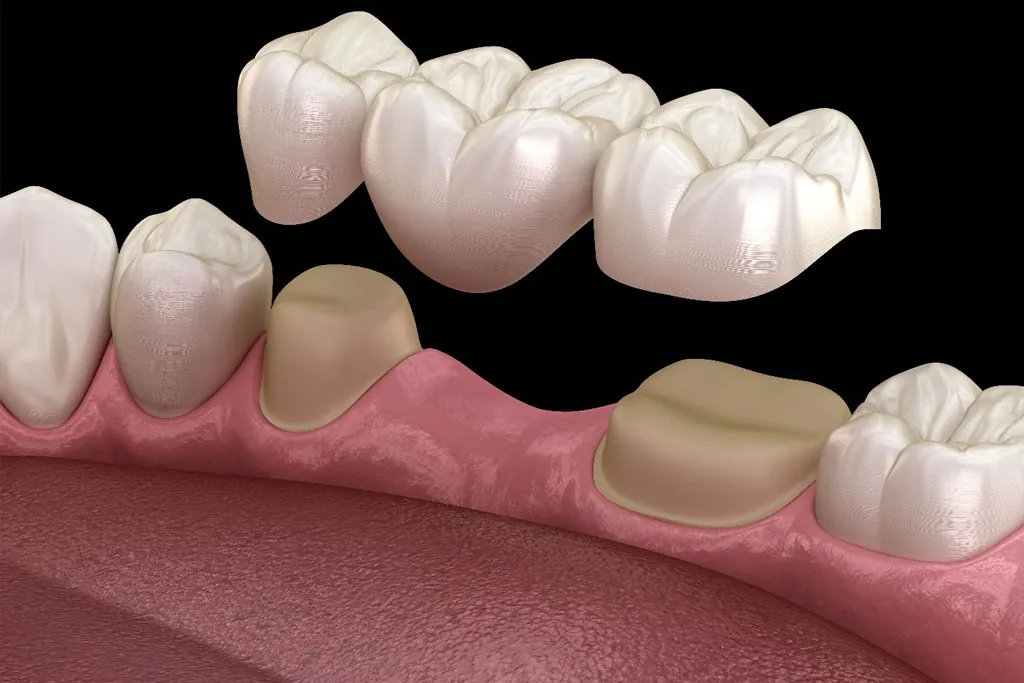
Dental Bridges
Dental bridges are another great solution for replacing missing teeth. They consist of a pontic (false tooth) that is anchored to the remaining natural teeth or dental implants.
There are several types of dental bridges:
- Traditional Bridges: These are the most common type and involve creating crowns for the teeth on either side of the gap and attaching a pontic in between.
- Implant-Supported Bridges: Instead of relying on natural teeth, these bridges are supported by dental implants. This option is ideal when several teeth are missing.
- Maryland Bridges: Also known as resin-bonded bridges, these are ideal for replacing front teeth and involve bonding a false tooth to the back of the adjacent teeth using metal or ceramic wings.
Cantilever Bridges: These are used when there is only one adjacent tooth to support the bridge.
Who Are the Right Candidates?
Dental bridges are suitable for patients with one or more missing teeth who still have healthy adjacent teeth. However, for patients with significant bone loss or weakened adjacent teeth, implant-supported bridges may be a better option.
Benefits of Dental Bridges:
- Restore the appearance and functionality of your smile.
- Prevent remaining teeth from shifting.
- Suitable for both front and back teeth.
- Implant-supported bridges provide a permanent, stable solution.
Positive Considerations:
While traditional bridges require some alteration of the adjacent teeth, the benefits far outweigh any potential concerns. By choosing a trusted dental office like SmileCare Dental of Fitchburg, you can ensure your bridge fits properly and remains durable.
Why Choose SmileCare Dental of Fitchburg?
Each of these restoration options offers unique benefits depending on your specific needs. At our dental office in Fitchburg, our team will help you evaluate your options based on factors such as oral health, lifestyle, and budget.
Whether you opt for dental implants, dentures, or a dental bridge, we provide personalized care according to your goals and ensure your smile restoration is comfortable, functional, and long-lasting.
Achieve a Beautiful, Functional Smile Again
There are various options available for replacing missing teeth, and selecting the right one depends on your specific needs. A consultation with your general dentist in Fitchburg is essential to evaluate factors such as the location of missing teeth, overall oral health, personal preferences, and budget. By working together with your dental team, you can choose the best solution to restore the function and beauty of your smile.
At SmileCare Dental of Fitchburg, we’re committed to helping you regain both the function and aesthetics of your smile. Don’t wait any longer—schedule your consultation today and take the first step toward a healthier, more confident smile.
Call us now at (978) 345-5563 to book your appointment!
FAQs
1. What is the best option for replacing missing teeth?
The best option for replacing missing teeth depends on your specific needs, such as the number of teeth lost, bone health, and budget. Dental implants are often considered the most effective long-term solution as they are durable, look natural, and prevent bone loss. However, dental bridges and dentures are also excellent alternatives, each with its own set of advantages. Consult with a dental professional to determine the best option for you.
2. Are dental implants a permanent solution for missing teeth?
Yes, dental implants are considered a permanent solution for missing teeth. They are surgically placed into the jawbone and integrated over time, making them durable and long-lasting. With proper care, dental implants can serve you for many years, potentially even a lifetime. Schedule a consultation to see if dental implants are right for you.
3. How do I know if I am a good candidate for dental implants?
Ideal candidates for dental implants have healthy gums and sufficient bone density to support the implant. If you’ve experienced bone loss, there are procedures like bone grafting that can restore the bone to support an implant. A consultation with your dentist will help assess your oral health and determine if dental implants are the best option for you.
4. How long does it take to get dentures or a dental bridge?
The process for getting dentures or a dental bridge typically involves a few visits. Dentures can usually be made in a couple of weeks, while dental bridges may take a bit longer, typically 2-3 appointments. Your dentist will work closely with you to ensure the best fit and comfort for your restoration. Schedule an appointment and start your treatment today.
5. Can a dental bridge be used for multiple missing teeth?
Yes, dental bridges can be used to replace multiple missing teeth. In fact, implant-supported bridges are a great option when you are missing multiple adjacent teeth. They provide a stable, durable solution while helping restore function and appearance. Schedule a consultation to discuss how a dental bridge can restore your smile.
6. Are dentures comfortable to wear?
Modern dentures are designed to fit comfortably and look natural, though it may take some time to adjust to them. Custom dentures are made to fit your mouth perfectly, and with proper care, they can help restore the full function of your smile. If you experience any discomfort, your dentist can adjust your dentures to improve the fit.
7. How do I care for my dental implants, dentures, or bridges?
Proper care of your dental implants, dentures, or bridges is essential for maintaining their longevity. Brushing and flossing regularly, avoiding hard or sticky foods, and scheduling routine dental check-ups will keep your restorations in optimal condition. For personalized care instructions, speak with your dentist during your next visit.